


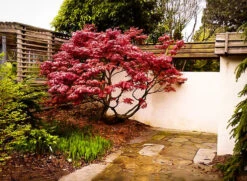
Oregon Sunset Japanese Maple
Original price was: $59.50.$41.65Current price is: $41.65.
- The Quality Choice for Smart Shoppers
- Shop with Confidence, Pay Safely
- Effortless Shopping, Quality Products
- Reliable Payments for Reliable Shopping

At the Tree Center we pride ourselves on our selection of Japanese Maples. Besides the ‘tried and true’ varieties, and many unique forms, we always like to bring something new to our clients. Not just any tree, but the best of the new developments in the exciting world of these remarkable trees. There truly is no other tree that has so many different varieties available, in a wide range of sizes, forms, leaf colors, and other unique features too. You can be sure that when we offer something new, it is outstanding, and absolutely worth growing, no matter if you are new to Japanese Maples, or if you are already a collector. So it is with pride that we offer you the Oregon Sunset Japanese Maple – a newer introduction that all the experts agree is outstanding in many ways.
Growing Oregon Sunset Japanese Maple Trees
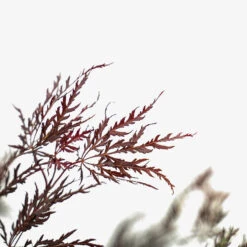
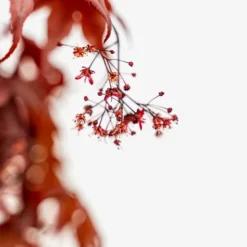
Perhaps the main feature of the Oregon Sunset Japanese Maple is the foliage colors. Japanese Maples have a way of unfolding their spring leaves in a graceful, gradual fashion. They emerge like tiny hands, and spread their fingers gradually, until they are fully formed, but still fragile looking. During this phase the leaves are a delicate, soft red, to match this delicate moment of re-awakening.
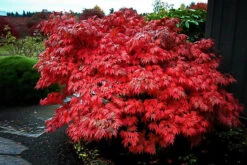
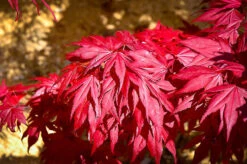
As the leaves mature, they turn darker, until for the summer the leaves are the classic plum red of the very best red-leafed Japanese Maples. As the cooler days of fall arrive, Oregon Sunset lives up to its name. The leaves take on wondrous shades of many reds, just as you might see across the sky during a spectacular sunset – the kind that watchers tend to spontaneously applaud. Some have seen a gentler sunset in the spring colors too – creating sunset at both ends of the growing season.
This kaleidoscope of seasonal colors is certainly the outstanding feature of this tree, but there is more that makes it very worthwhile as your first Japanese Maple, or to add to your growing collection. The form of the tree is upright, but very broad and low, making a spreading form, but without the weeping character seen in some other Japanese Maples. The leaves are divided into seven long, narrow segments, and are carried in tufts at the ends of the branches, each leaf like a hand with the fingers hanging down.
Planting Location and Uses
The broad, low growth means that the tree can be used in the foreground, with other, taller plants behind. It also makes a wonderful specimen on a slope, or in a smaller garden. Like other smaller Japanese Maples, ‘Oregon Sunset’ can be grown for many years as a container plant. This means that you can use it to decorate your patio or terrace, or place it in an attractive container on a gravel area where it can be admired.
Oregon Sunset Japanese Maple grows best, and colors best, in a location with sun for at least part of the day. In cooler zones, with a good water supply, it can be grown in full sun. In warmer areas it is best to choose a spot which is sunny in the morning during the summer months, but shaded from around noon onwards. The strong afternoon sun can scorch the leaves, especially if the soil becomes dry. It will grow in most types of soil, but you should enrich your soil with plenty of organic material before planting. As well, mulch the root zone in spring with rich organic material, as a natural and safe fertilizer for your tree.
Watering and Drought Tolerance
Although an established tree may handle a little dryness in summer, these trees always grow best with a steady supply of water, so that the soil is moist. Do not, however, water soil that is already wet, as good drainage is also important. In a container, make sure there is a drainage hole, and use a potting soil for outdoor planters. Water thoroughly every time, so that water drains from the pot. Let the top inch or so dry, then water again. Do not give tiny amounts of water constantly, and do not leave the pot standing in a saucer of water.
Buying Oregon Sunset Japanese Maple at The Tree Center
The Oregon Sunset Japanese Maple is a selected form of this tree, and our trees are grown for us by specialist nurseries, so you can be sure the tree is true to type. Avoid cheaper, un-named trees, as these could be seedlings, which are very variable, often grow tall, and are almost always very inferior to named varieties. Every year we introduce some new, rare forms of Japanese Maple, and the collectors among our clients snap them up very quickly. This will certainly be so with this beauty, so don’t hesitate, and order this wonderful tree now.
Be the first to review “Oregon Sunset Japanese Maple”
Related products
Oak Trees
Japanese Maple Trees
Japanese Maple Trees
Japanese Maple Trees
Shade Trees
Japanese Maple Trees
Shade Trees
Japanese Maple Trees
Reviews
There are no reviews yet.