



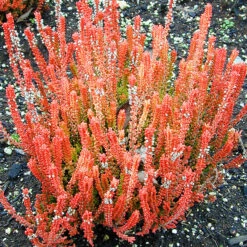
Firefly Scotch Heather
Original price was: $34.50.$24.15Current price is: $24.15.
- The Quality Choice for Smart Shoppers
- Shop with Confidence, Pay Safely
- Effortless Shopping, Quality Products
- Reliable Payments for Reliable Shopping

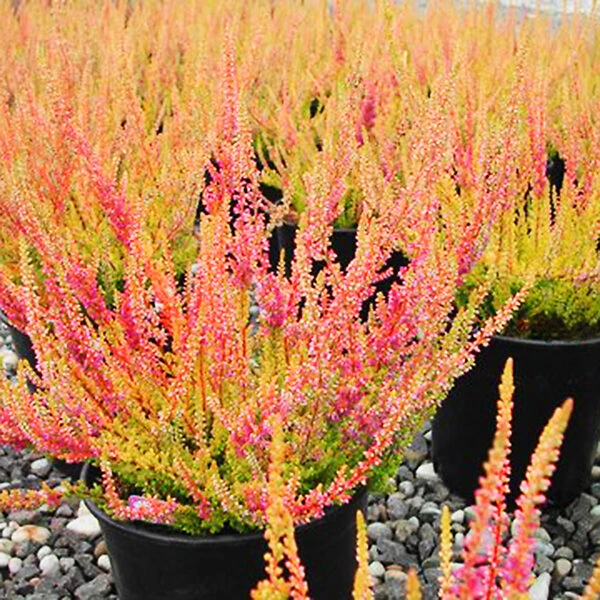
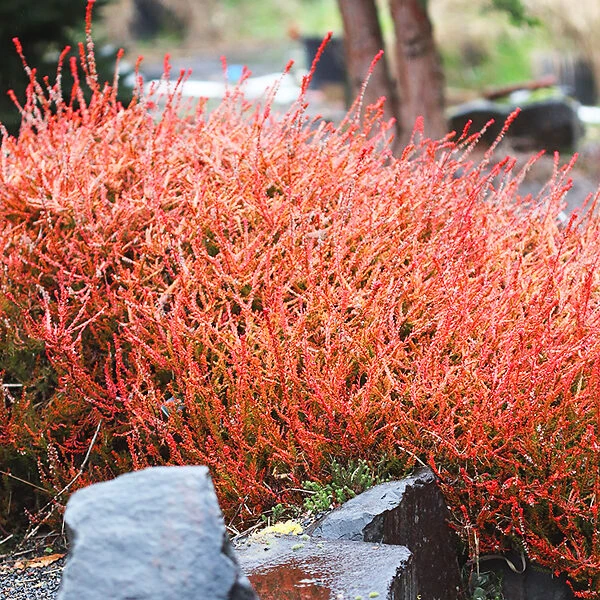
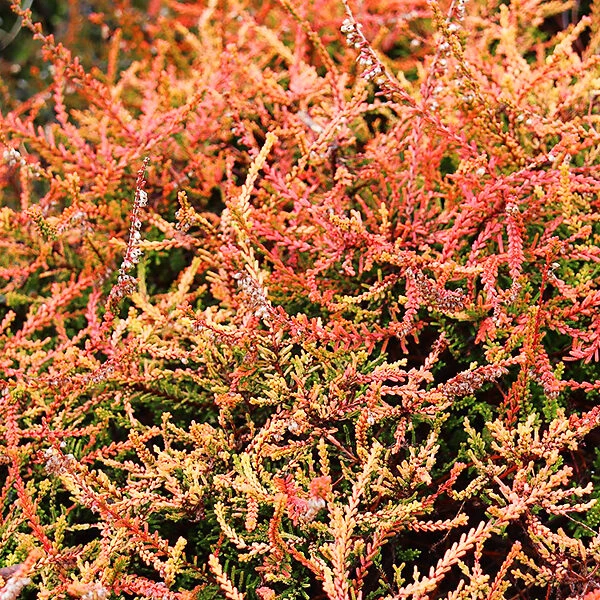
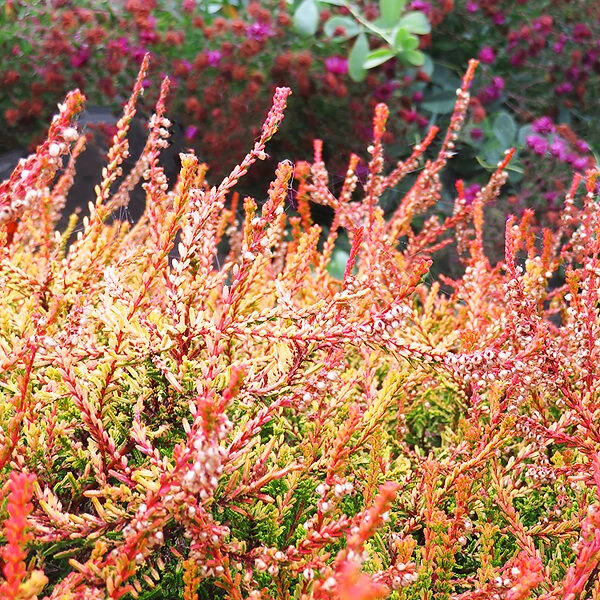
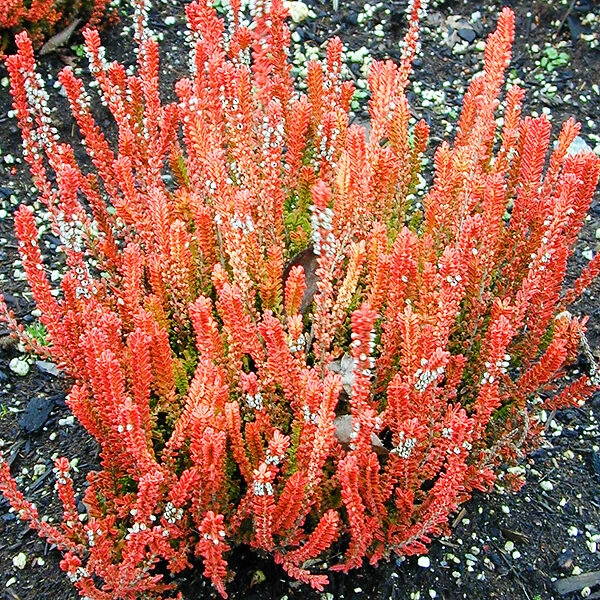
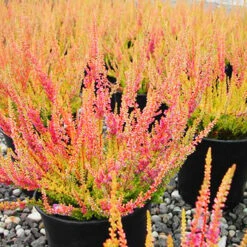
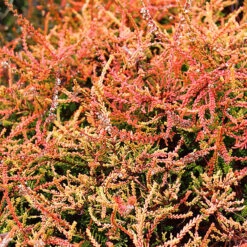
It’s hard to believe that such a small plant as the Firefly Scotch Heather could deliver so much color to your garden, but believe us, this is a plant that really delivers. Perhaps it should be called ‘Flamboyant’, so varied are the colors you will see as the seasons roll around. In spring the new growth is a bright and cheerful golden yellow to lime green, and depending on your climate this may hold through much of the summer. At some point, and certainly by early fall, shades of apricot and salmon begin to creep in, spreading across the branches. These become light terracotta, and once winter sets it they explode into fiery brick red, lasting all the way through to spring. Let’s not forget the flowers, which appear from July to September along the upper part of the branches. These are purple-pink, making a striking contrast with the foliage. An ideal groundcover for poor dry and sandy soils, even near the ocean, the unique look of this plant makes it the answer to your garden problems.
Growing Firefly Scotch Heather
Size and Appearance
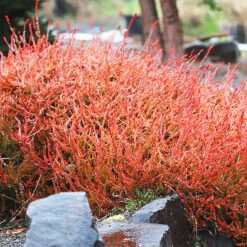
Firefly Scotch Heather is a low clump of ascending and spreading branches, rising to about 18 inches tall and spreading at least 2 feet wide, and 3 or even 4 feet across in time. It has many slender branches covered in tiny scale-like leaves that are yellow on new growth, turning lime or chartreuse green. It isn’t long, though, before shades of apricot and salmon start to spread across the leaves, making every day a little different, and intensifying as fall approaches. With the arrival of cooler nights the leaves become more terracotta in tone, and by winter they are glowing, fiery brick-red. That color holds all through winter, making this plant one of the best choices for winter color in your garden.
All that color is boosted even further by the arrival of the flowers. These small tubular to bell-shaped blooms have four petals and grow all along the upper parts of the stems. They are a deep lilac-pink, creating a vibrant contrast with the yellow and orange tones of the foliage. Flowering usually begins in August and continues to the end of September, with the flowers holding even after they are dead. Scotch heather is one of those plants whose flowers hold their color when dried, so cut some stems and hang them upside down to dry, then use them indoors during winter.
Using Firefly Scotch Heather in Your Garden
You can grow the Firefly Scotch Heather as a groundcover in open sunny parts of the garden, on slopes and among rocks. It can be used at beach-front cottages. For mass planting space plants 15 to 18 inches apart and they will form a continuous covering within a short time. Individual plants look great in the levels of retaining walls, and also at the edge of beds fronting a lawn. Grow it among other small shrubs, or with other plants from similar ecology, such as dwarf pines, junipers, catmint and flowering sages. If you don’t have suitable soil, plant it in a pot or container, using soil for acid-loving plants, and place it on a terrace or in a cool porch for the winter.
Hardiness
The Firefly Scotch Heather will grow well all the way from zone 5 to zone 8, doing best in areas with cooler summers.
Sun Exposure and Soil Conditions
You will see the best foliage colors when you grow your Firefly Scotch Heather in full sun, but it will tolerate a little partial shade as well. It must be grown in acidic soil, with a pH no more than 6.5, and it enjoys acid soils all the way down to 5.0. Don’t plant in alkaline soil – grow it in a pot instead. The soil should be well-drained and sandy soils are preferred, even poor, low-nutrient soils, for which it is a great choice. Once established it has good resistance to drought, although an occasional thorough watering during extended dry spells is always welcome. It is also resistant to salt-spray, so it thrives near the ocean.
Maintenance and Pruning
Very little attention is needed to grow the Firefly Scotch Heather well, once it is established. It is usually free of pests and diseases, and left alone by deer. The only care we advise is to trim it in early spring, removing all but the last inch of the flowering stems from the previous season. Hedge trimmers can be used on group plantings to do this. New growth will soon return, keeping your plants attractive and bushy.
History and Origin of Firefly Scotch Heather
Also called Ling, the Scotch (or Scots) heather, Calluna vulgaris grows wild in open areas on hilltops and mountain slopes, especially in poor, sandy soils and areas that have been overgrazed. Sheep and cattle won’t eat it, so it can become the only plant left standing. The name Calluna is from Greek, meaning ‘sweeps clean’, because this plant has been traditionally used for making brooms. About 500 varieties have been developed over the years, mostly in Europe and the UK, but we know very little about the origins of most of them, except that they were probably found as unusual seedlings. The variety called ‘Firefly’ is widely seen as one of the most colorful of them all.
Buying Firefly Scotch Heather at the Tree Center
If you garden on poor, sandy, acid soil then you know how hard it can be to grow plants well. The Firefly Scotch Heather is nature’s gift to such a garden, because it loves what so many plants hate. For toughness it can’t be beaten, so order now, while our limited supply lasts – it won’t be for long.
Be the first to review “Firefly Scotch Heather”
Related products

Other Shrubs & Hedges
Camellias
Hydrangeas

Hydrangeas
Ornamental Grasses
Shrubs and Hedges
Other Shrubs & Hedges
Butterfly Bush
Reviews
There are no reviews yet.